

Landmark FCC Case Could Rein in Utility Barriers to Rural Broadband Nationwide
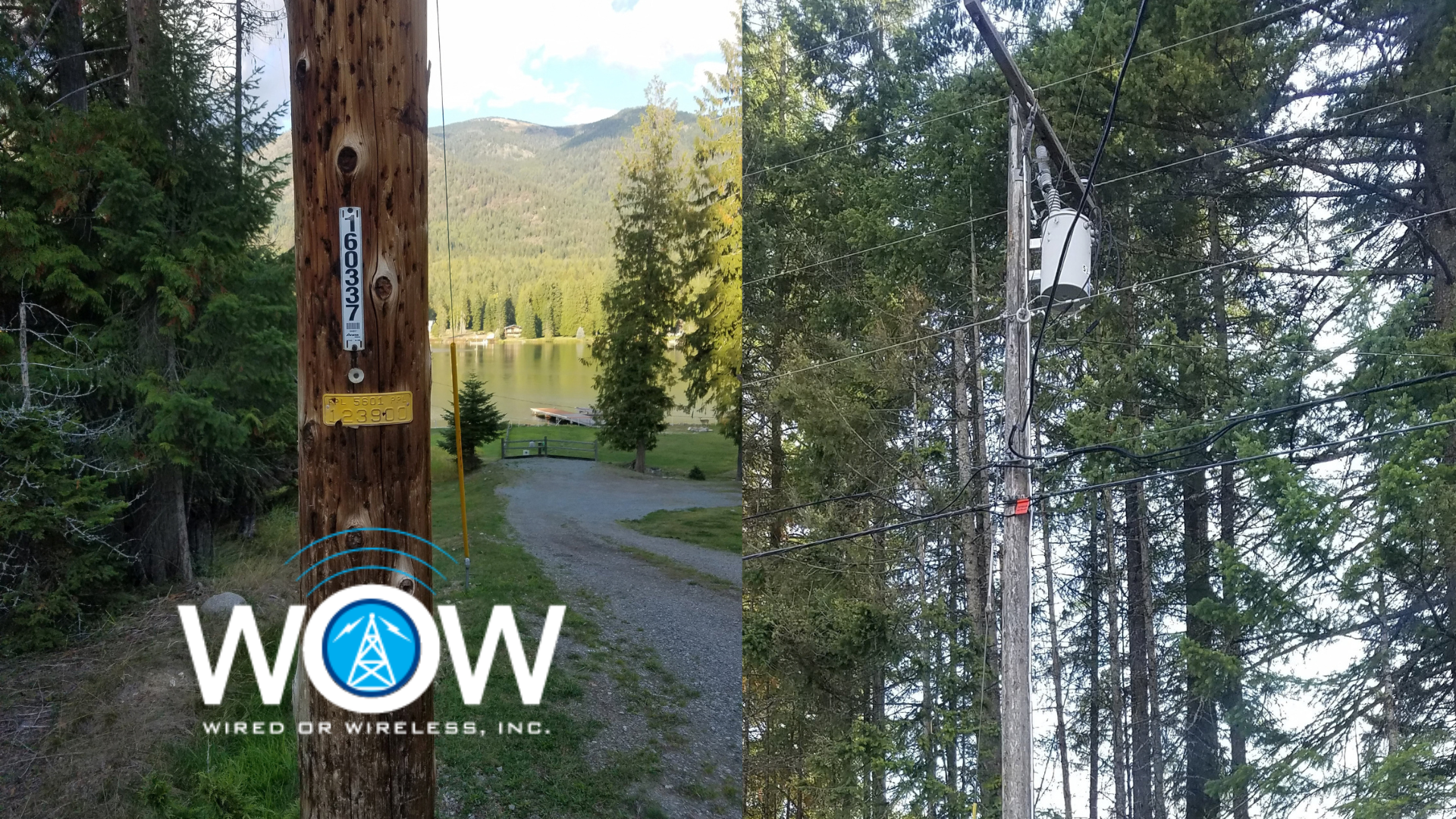
Pole attachments in Hope and Clark Fork, Idaho.
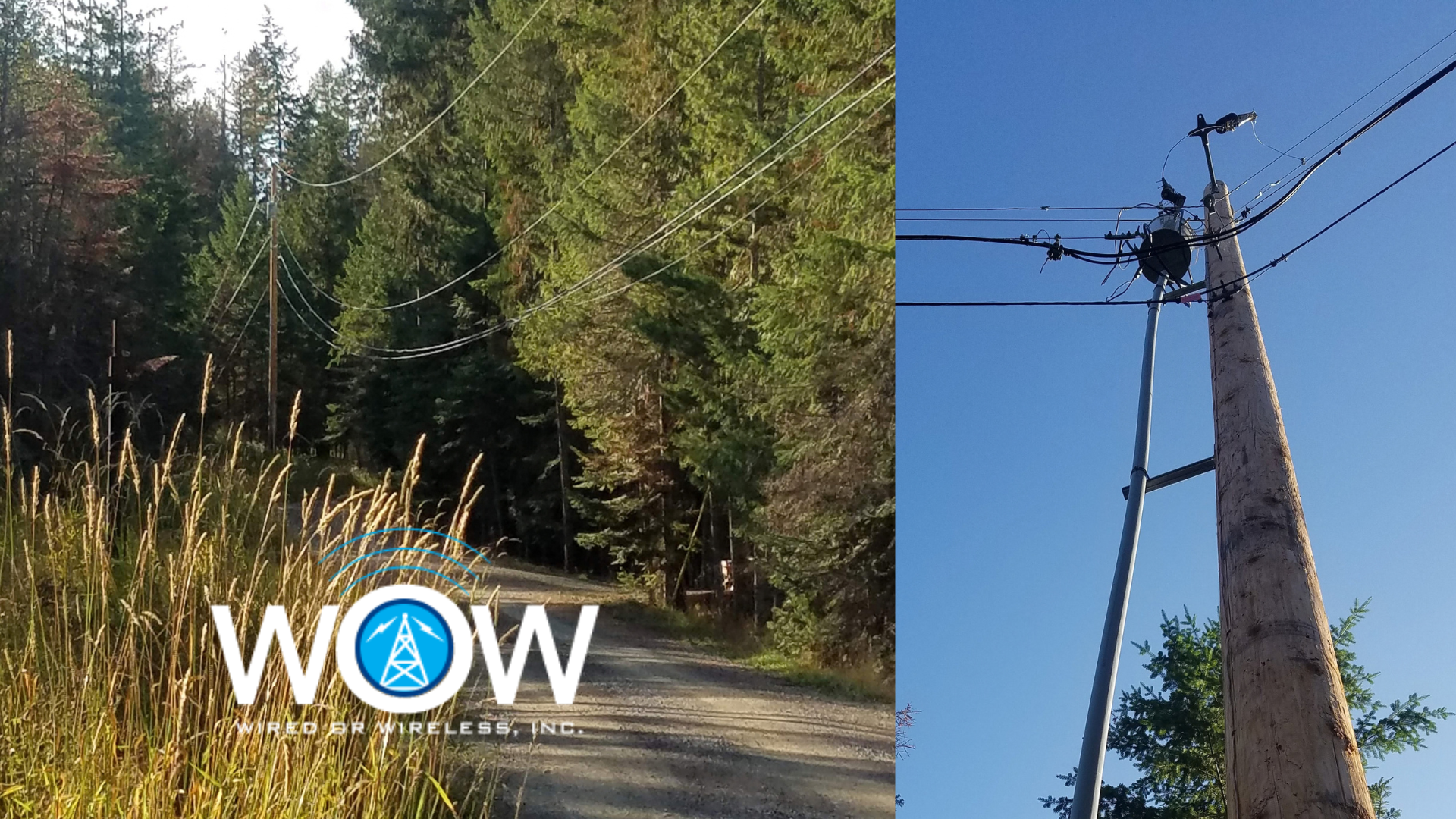
Fiber deployment in Hope and Clark Fork, Idaho.
A small broadband provider’s fight for fair pole access could reshape how utilities are held accountable Nationwide.
No utility should be able to act as the rulemaker, regulator, judge and enforcement authority. The Wild West of pole attachments needs to end.”
SPOKANE VALLEY, WA, UNITED STATES, September 24, 2026 /EINPresswire.com/ -- For years, small internet providers have faced a hard reality: the utility that owns the poles can often dictate the price, control access and stop construction—and in many states there is a regulatory gap when states say they regulate pole attachments yet have no effective rules. This allows the utilities to create their own rules and processes which effectively deters Broadband from being deployed in rural areas.— William B. Geibel Jr.
Wired or Wireless, Inc. (“WOW”) has made a formal FCC complaint against, Washington based Avista Corporation.
The Federal Communications Commission has opened a formal proceeding to consider WOW’s complaint against Avista Corporation. The case challenges pole-attachment rates, more than $334,000 in disputed back billing, unsupported pole counts, restrictions on fiber overlashing and stop-work orders that WOW says obstructed broadband deployment in rural northern Idaho.
Although the complaint involves one provider and one utility, WOW believes the case presents a national question: Can a state remove pole attachments from FCC oversight while failing to create effective rules or a functioning regulatory forum of its own?
“This case is about whether a utility can make up the rules, impose the charges and then use its control over essential infrastructure to stop a smaller provider from working,” said William B. Geibel Jr., president of Wired or Wireless. “No utility should be able to act as the rulemaker, regulator, judge and enforcement authority. The Wild West of pole attachments needs to end.”
WOW is an 11-employee telecommunications and broadband provider whose network is in 11 counties in Idaho and Washington states. The portion in question passes approximately 1,500 homes in Hope and Clark Fork, Idaho and includes 561 confirmed attachments on Avista-owned poles.
According to WOW’s complaint, Avista increased WOW’s annual pole-attachment charge from $7,554.40 to $49,053.12 in 2023—an increase of approximately 549%. Avista also demanded $334,288.80 in back billing dating to 2018 and billed WOW for poles it was not on.
WOW alleges that Avista used what it called an “old telecom rate” without demonstrating that the calculation complied with the FCC’s current maximum-rate rules or amending its contract with WOW. WOW also alleges that Avista required prior approval, engineering reviews, route applications and fees before WOW could add fiber to its own existing cables—a process known as overlashing—even though FCC rules prohibit prior-approval requirements and review fees for qualifying overlashing.
When WOW disputed the invoices, the company alleges, Avista issued stop-work directives and restricted access without identifying a qualifying capacity, safety, reliability or engineering justification.
The consequences extend beyond the two companies. WOW says the restrictions delayed broadband work that an established rural provider was ready to perform using infrastructure already in place. Projects were then delayed or had to depend on Idaho broadband grant funding.
“Taxpayers should not have to fund deployment that a local provider was already prepared to undertake,” Geibel said. “When utilities use disputed charges and access restrictions to hold up broadband construction, the public eventually pays the price.”
The jurisdictional history highlights the larger problem. Idaho had certified that it regulated pole attachments, effectively displacing FCC oversight through a process known as reverse preemption. But the Idaho Public Utilities Commission (IPUC) never issued or made effective rules or regulations implementing their regulatory authority over pole attachments. They never regulated the rates, terms, and conditions of pole attachments nor have established procedures for resolving pole access complaints as required by the FCC.
WOW waited 194 days before the IPUC dismissed its complaint for lack of jurisdiction.
That regulatory gap is now receiving national attention. In June 2026, the FCC warned reverse-preemption states that they must actually regulate pole-attachment rates, terms and access—not merely claim authority. The FCC emphasized that states must have effective rules and procedures for resolving complaints and acknowledged that incomplete state regulation can cause unnecessary costs and delays for broadband providers.
The FCC noted that 23 states and the District of Columbia claim some degree of pole-attachment jurisdiction, with most certifications dating from before Congress extended federal protections to telecommunications carriers in 1996. The FCC is now considering whether states should be required to recertify and clearly identify what providers, infrastructure and disputes they regulate.
WOW’s complaint also follows an earlier federal ruling involving a different Avista infrastructure requirement. In 2020, the Federal Energy Regulatory Commission partially granted a complaint brought by the Bonneville Power Administration and found that an additional transmission-service requirement imposed by Avista violated Avista’s federal tariff. FERC determined that the requirement improperly restricted a customer’s use of transmission service it had already purchased and prevented comparable use of Avista’s system.
While that proceeding involved electric transmission rather than pole attachments, WOW believes it raises a similar concern: whether a utility may impose additional requirements and costs that are not supported by the governing national framework.
“This is not just an Idaho problem,” Geibel said. “Internet providers across the country are being strong-armed by utilities that control the poles needed to reach rural communities. A national broadband strategy cannot succeed if smaller providers can be priced out, delayed indefinitely or stopped from using infrastructure they already occupy.”
The FCC Enforcement Bureau opened Proceeding No. 26-236 on September 1. The Commission’s schedule anticipates final action within 270 days of WOW’s August 27 complaint. Avista has not yet filed its answer, and the FCC has not ruled on the merits.
WOW is asking the FCC to determine the lawful rate, require supporting data, reconcile the disputed back bill, enforce federal overlashing protections and remove access restrictions unsupported by legitimate safety, capacity, reliability or engineering concerns and impose fines that will make Utilities take notice.
“For small providers, this case represents something long overdue.” Geibel said.
Wired or Wireless, Inc. v. Avista Corp.
FCC Proceeding No. 26-236
FCC Bureau ID No. EB-26-MD-005
The CommLaw Group, PLLC
Robert H. Jackson
703-714-1300
William B. Geibel Jr.
Wired or Wireless, Inc.
+1 509-542-1421
email us here
Visit us on social media:
LinkedIn
Legal Disclaimer:
EIN Presswire provides this news content "as is" without warranty of any kind. We do not accept any responsibility or liability for the accuracy, content, images, videos, licenses, completeness, legality, or reliability of the information contained in this article. If you have any complaints or copyright issues related to this article, kindly contact the author above.
